
Soong. Hair
Whether it’s your own hair or hair extensions, tangling happens to almost everyone.
Most of the time, tangling doesn’t happen “suddenly.” It builds up over time and usually reflects the current condition of the hair.
Once you understand why, it’s easier to tell if it’s normal or if something is off.
It Starts with Structure: Cuticle Is Everything
Each strand of hair has a cuticle layer on the outside. You can think of it as a protective outer layer that directly affects how smooth the hair feels.
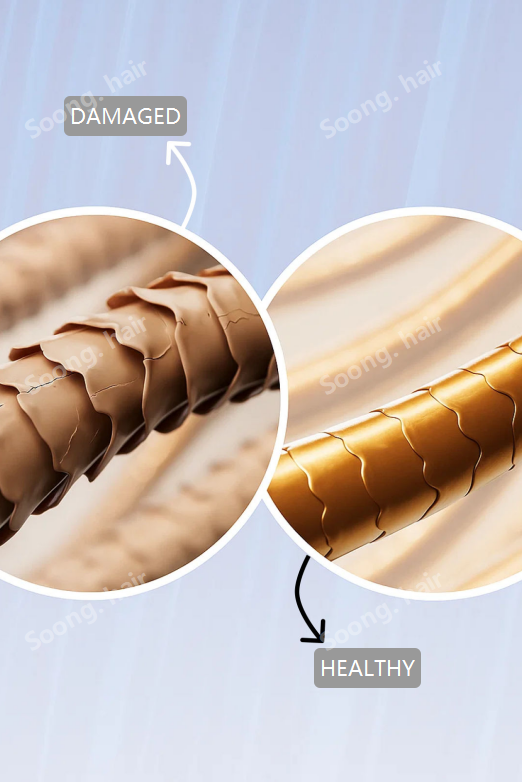
When the hair is healthy, the cuticle is flat and aligned. The surface is smooth, so there’s less friction and less chance of tangling.
But after too much bleach or frequent heat styling, the cuticle can get damaged, lift up, or even break off. This makes the surface rough, increases friction, and leads to tangling.
So, in many cases, in simple terms, tangling happens when the cuticle surface is no longer smooth.
Daily Friction
Tangling is not caused by one moment — it’s usually the result of daily friction building up.
For example:
· Friction from your pillow while sleeping
· Rubbing against clothes
· Movement from wind or workouts
· Rough brushing when hair is wet
All of these increase contact and resistance between strands. Over time, hair starts to wrap around itself and forms knots.
Dryness
Dry hair is more likely to tangle — most people can feel this directly.
But dryness is not just about losing moisture. It often means the hair structure is less stable. The cuticle can’t stay closed, the surface becomes rough, and static increases.
In this condition, hair strands stick to each other more easily and tangle, especially from mid-length to the ends.
In other words, dryness makes friction and structural issues worse.
A Key Point: Cuticle Direction
This is a very important factor that affects why hair tangles.
High-quality full cuticle hair has all cuticles aligned in the same direction, from root to end. This reduces friction and keeps the hair smooth and stable.
But if the hair comes from mixed sources or the structure is disrupted, the cuticle direction can become uneven or even reversed.
When that happens, friction increases significantly, tangling becomes more frequent, and it’s harder to brush out.
That’s why some hair gets more tangled the more you brush it.
What Does Tangling Tell You?
· Usually it means:
· Cuticle is damaged
· Too much friction
· Hair is dry
· Cuticle direction is not aligned
Basically, the rougher and less stable the cuticle surface is, the easier the hair tangles.
Care Is About Reducing the Conditions for Tangling
Hair care is not about making hair “never tangle,” but about reducing the factors that cause tangling.
Small habits help a lot, like:
· Being gentle with wet hair
· Keeping hair neat before sleep
· Keeping it moisturized
· Not leaving hair unbrushed for too long
· Avoiding excessive heat styling
It can make a big difference in keeping hair stable.
For hair extensions, this is even more important. Since extensions are no longer connected to the scalp, they don’t receive natural oils, making them more prone to dryness and friction.
So daily care directly affects how smooth the hair feels and how long it can last.
Tangling is more like feedback from the hair.
Once you understand the reasons, you can tell whether it’s normal or if the hair structure is already compromised.
That’s why some hair tangles no matter what, while some always stay smooth and stable.